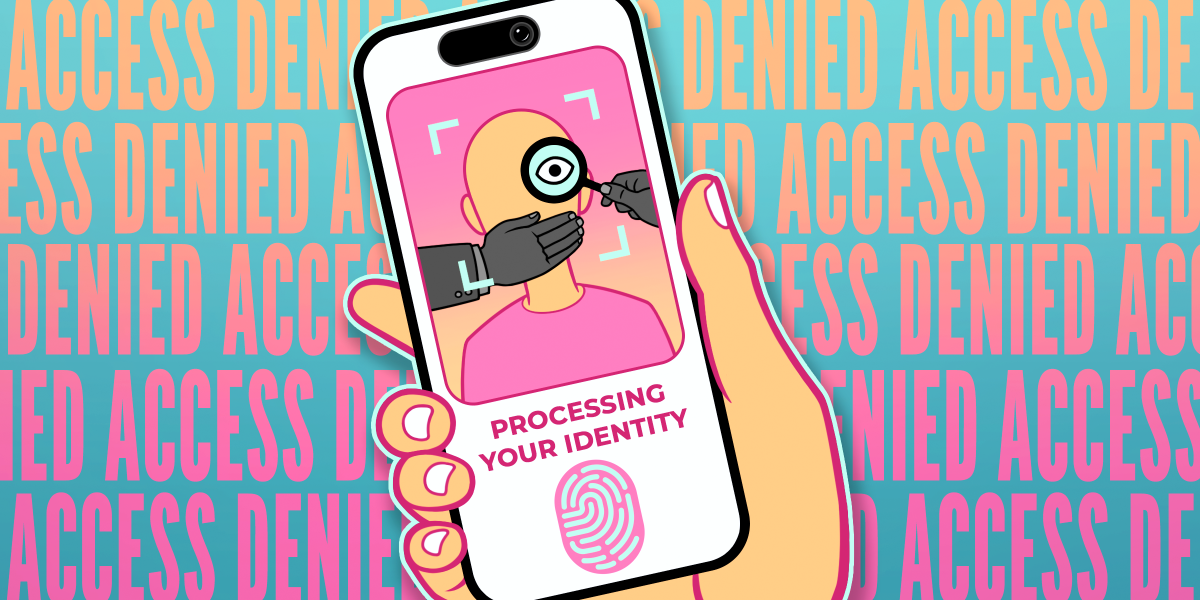
Age verification laws are proliferating fast across the United States and around the world, creating a dangerous and confusing tangle of rules about what we’re all allowed to see and do online. That's why today, we're launching EFF.org/Age, a one-stop shop for users seeking to understand what these laws actually do, what’s at stake, why EFF opposes all forms of age verification, how to protect yourself, and how to join the fight for a free, open, private, and yes—safe—internet.
Authoritarian governments do not like the anonymity the internet affords it’s citizens. They are “fixing” this issue under the best guise they have: “child safety.” won’t someone think of the children?
Authoritarian governments do not like the anonymity the internet affords it’s citizens.
The internet has never properly afforded anonymity. Advertisers are constantly trying to tag and track people inside and between websites, apps, and platforms. What we’re seeing isn’t a new iteration of the surveillance state, but a weaponization of existing tracking tools.
won’t someone think of the children?
I mean, this cuts both ways. Because there is really, legitimately, and seriously a crisis of predation by commercial vendors and individual exploiters alike that’s laser-targeted to the most vulnerable end-users of the internet. That’s not exclusively children. Plenty of these scammers and creepers target the elderly, the mentally disabled, and the gullible. And the fact that our federal and state institutions seem cavalier to the degree of fraud and malicious practices on the internet, when they claim to be so obsessed with protecting us from migrants, terrorists, evil drug dealers, and domestic radicals really speaks to their uselessness relative to their stated purpose.
But on the other hand, yeah. All of this paranoia around kids using the internet does seem to be a backdoor to harass minority groups and dissidents. I might be more concerned about this except - per the above - they’ve clearly demonstrated vanishingly little technical savvy or procedural competency to date.
Seems like we’re going to continue to get the same Big Punishments For Minor Infractions fear-inducing policing we’ve come to expect from the War on Drugs/Crime/Terrorism of the last sixty years.

Authoritarian governments do not like the anonymity the internet affords it’s citizens. They are “fixing” this issue under the best guise they have: “child safety.” won’t someone think of the children?
It’s wild how long this tactic has worked.
The internet has never properly afforded anonymity. Advertisers are constantly trying to tag and track people inside and between websites, apps, and platforms. What we’re seeing isn’t a new iteration of the surveillance state, but a weaponization of existing tracking tools.
I mean, this cuts both ways. Because there is really, legitimately, and seriously a crisis of predation by commercial vendors and individual exploiters alike that’s laser-targeted to the most vulnerable end-users of the internet. That’s not exclusively children. Plenty of these scammers and creepers target the elderly, the mentally disabled, and the gullible. And the fact that our federal and state institutions seem cavalier to the degree of fraud and malicious practices on the internet, when they claim to be so obsessed with protecting us from migrants, terrorists, evil drug dealers, and domestic radicals really speaks to their uselessness relative to their stated purpose.
But on the other hand, yeah. All of this paranoia around kids using the internet does seem to be a backdoor to harass minority groups and dissidents. I might be more concerned about this except - per the above - they’ve clearly demonstrated vanishingly little technical savvy or procedural competency to date.
Seems like we’re going to continue to get the same Big Punishments For Minor Infractions fear-inducing policing we’ve come to expect from the War on Drugs/Crime/Terrorism of the last sixty years.