

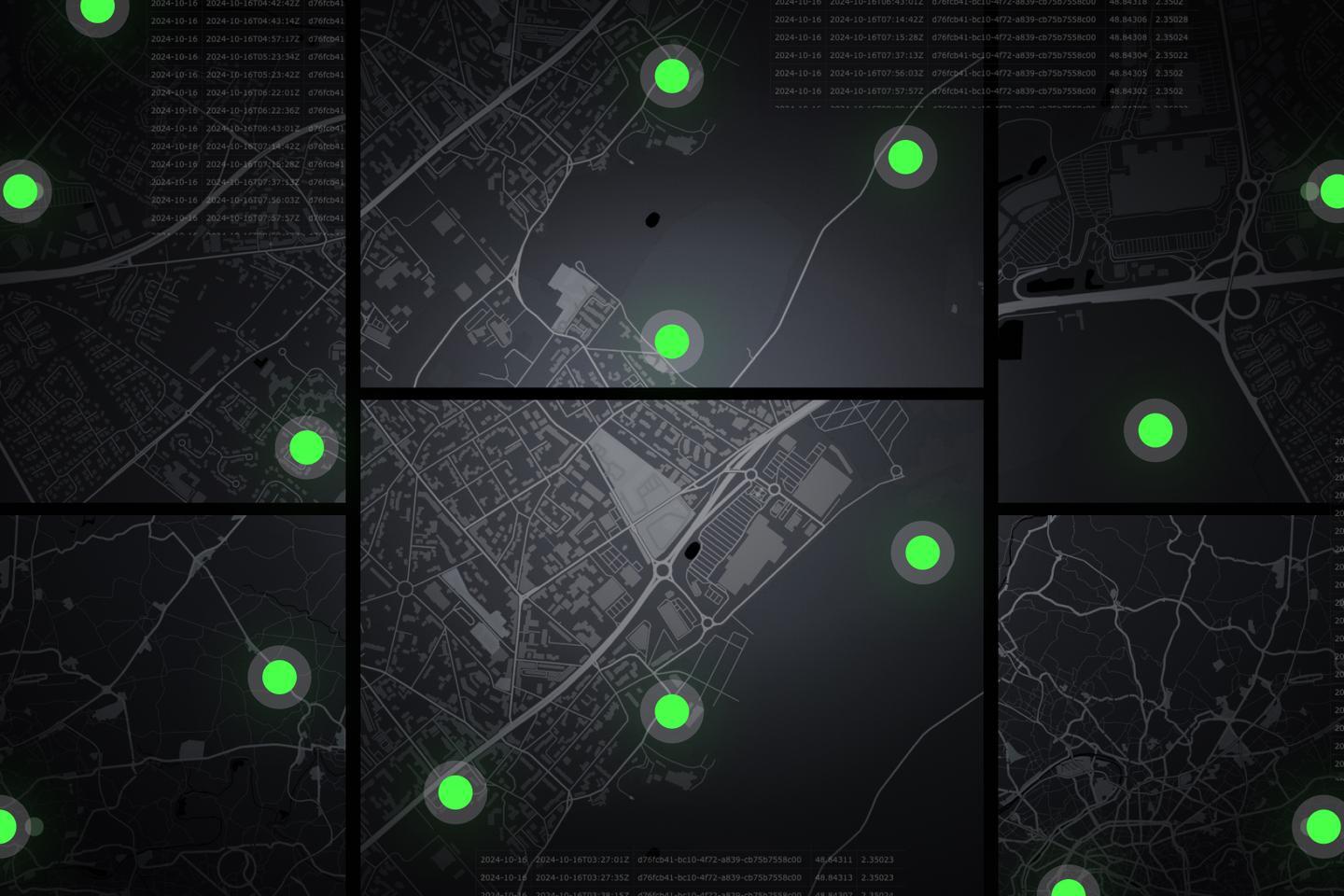
Investigation | Using easily accessible advertising data, Le Monde was able to pinpoint the identities, home addresses and daily routines of several dozen people working for sensitive official entities.
The identities of French spies are among the Republic’s most closely-guarded secrets. Revealing them is even a criminal offense. Yet, with just a little technical know-how, one can track down the home addresses of certain agents, and thereby discover their identities, daily routines and even those of their loved ones, all of which represent risks to their safety and that of their families and their agencies.
The blame lies with the advertising industry, an insatiable and unregulated sector with no regard for transparency, which extracts billions of personal data points from people’s smartphones every day. This data, which can be used to track people’s movements particularly precisely, down to a few meters, is then resold. Evading such tracking, except for users with flawless digital hygiene, is nearly impossible.
Staff members working for all of France’s most sensitive institutions are affected: intelligence officers, personnel responsible for protecting the country’s top officials, high-ranking police officers, members of the elite National Gendarmerie Intervention Group (GIGN) unit, military personnel stationed at critical nuclear weapons bases, defense company executives, prison staff, and even nuclear power plant staff.
They could literally just leave their phones at home.
Phones are used as communication. Unless you want to go back to Nokias and Razrs
If you’re in intelligence.services, security should be a priority. You can also just have phones at work.