• 378 Posts
  • 593 Comments
Joined 3 years ago
cake
Cake day: June 1st, 2023

help-circle

  • The beef industry is no stranger to creating problems and promoting things that come back to hurt the industry. See how they actively try to downplay beef’s green house emissions and that beef and meat consumption needs to go down for climate change. Climate change has then in turn lead to drought that has reduced ability to raise cattle

    The US beef industry is creating an army of influencers and citizen activists to help amplify a message that will be key to its future success: that you shouldn’t be too worried about the growing attention around the environmental impacts of its production.

    In particular, it would like you not to be especially concerned about how meat consumption needs to be reduced if we are to avoid the most violently disruptive forms of planetary heating (even if all fossil fuel use ended tomorrow).

    https://www.theguardian.com/environment/2023/may/03/beef-industry-public-relations-messaging-machine

    much of the U.S. faced a drought for much of 2020-2023. This made it more difficult to grow the plants and food that are used to feed cattle; as a result, cattle feed prices rose during that time, and many cattle farmers opted to either reduce or simply not increase their herd size in response to what was effectively an increase in their input costs.

    Although drought is a naturally occurring phenomenon, it’s also exacerbated by global warming. This is relevant because beef production itself is a significant driver of global warming, due to the massive amounts of land used for feed crops and pasture, as well as the methane cattle emit as part of their digestive process.

    […]

    All of this is as ironic as it is unsustainable: The process of raising cattle for beef is, itself, making it more difficult to raise cattle for beef.

    https://sentientmedia.org/higher-beef-prices-arent-good-news-for-climate-change/


  • The industry cares a lot about its image in general. For instance the beef industry has a dedicated team watching social media for beef related conversations online 24/7

    Using checkoff money, NCBA has developed what it has called a “Digital Command Center” – a sophisticated online monitoring system that tracks media outlets and social media for more than 200 beef-related topics. Hosted in Denver in a space that “looks like a military operations center combined with the TV section at an electronics retailer”, according to a recent Cattlemen’s Beef Board mailer sent to ranchers, the command center alerts members of NCBA’s issues management and media relations team whenever stories or online chatter rise above a certain threshold. It’s staffed 24 hours a day, 7 days a week, with personnel redundancies built in to make sure someone’s always watching.

    Inside big beef’s climate messaging machine: confuse, defend and downplay


  • So if i created my own keyboard from scratch on a open hardware microcontroller, could i implement this?

    The USB controller that interrupts the CPU lives on the other side of the connection, so you’d just be building hardware that responses to the polling. If you’re curious what that looks like, Ben Eater has a cool video looking at what that looks like for a USB 2 keyboard https://youtu.be/wdgULBpRoXk

    There’s also the case of Bluetooth dongle keyboards not working in UEFI (except that one) but USB always do. Is it this or just the UEFI not having drivers?

    I am no USB Keyboard expert, but through the power of looking it up it seems like most of these do not operate as a HID (human interface device, like mouse and keyboard) so need driver support, but some start up with a basic HID proxy which might be you have one that works. From an older thread about BIOSes rather than UEIFs

    A keyboard using Bluetooth cannot access the BIOS. Logitech Bluetooth keyboards get around this by having a dongle that pairs with the keyboard in a more basic, non-Bluetooth mode until the driver kicks in and switches modes. Microsoft might be similar mode with their keyboards and dongles, but I cannot confirm that.

    https://superuser.com/questions/242457/use-a-bluetooth-keyboard-to-access-edit-the-bios


  • Technically, interrupts are still often involved… just from the USB controller on the state of the polling instead of the keyboard directly on a keypress


    Some keyboards implement the USB Boot Keyboard profile specified in the USB Device Class Definition for Human Interface Devices (HID) v1.11 and are explicitly configured to use the boot protocol. These are limited to 6-key rollover (6KRO) and will interrupt the CPU every time the keyboard is polled (even if there is no state change) unless the USB controller is programmed to tell the keyboard to respond with negative acknowledgments, which the USB controller discards in hardware without interrupting the CPU, when there are no state changes to report

    https://en.wikipedia.org/wiki/USB_human_interface_device_class#Keyboards


  • This is mostly greenwashing and false hype by the beef industry with misleading numbers

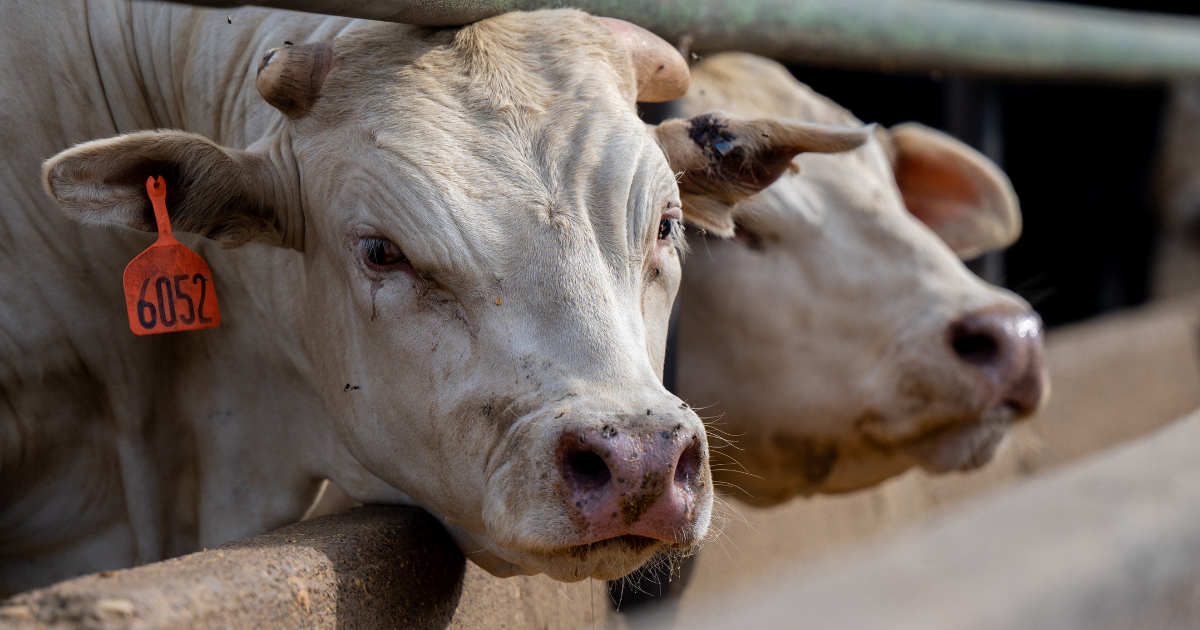
    What’s more, feeding cattle algae is really only practical where it’s least needed: on feedlots. This is where most cattle are crowded in the final months of their 1.5- to 2-year lives to rapidly put on weight before slaughter. There, algae feed additives can be churned into the cows’ grain and soy feed. But on feedlots, cattle already belch less methane—only 11 percent of their lifetime output

    […]

    Unfortunately, adding the algae to diets on the pasture, where it’s most needed, isn’t a feasible option either. Out on grazing lands, it’s difficult to get cows to eat additives because they don’t like the taste of red algae unless it’s diluted into feed. And even if we did find ways to sneak algae in somehow, there’s a good chance their gut microbes would adapt and adjust, bringing their belches’ methane right back to high levels.

    […]

    All told, if we accept the most promising claims of the algae boosters, we’re talking about an 80 percent reduction of methane among only 11 percent of all burps—roughly an 8.8 percent reduction total

    https://www.wired.com/story/carbon-neutral-cows-algae/