

4·
1 month agoexplicitly treating the threadiverse as groups
What do you mean by groups? Are you talking about groups like how they’re described in this fedi.tips article?
explicitly treating the threadiverse as groups
What do you mean by groups? Are you talking about groups like how they’re described in this fedi.tips article?
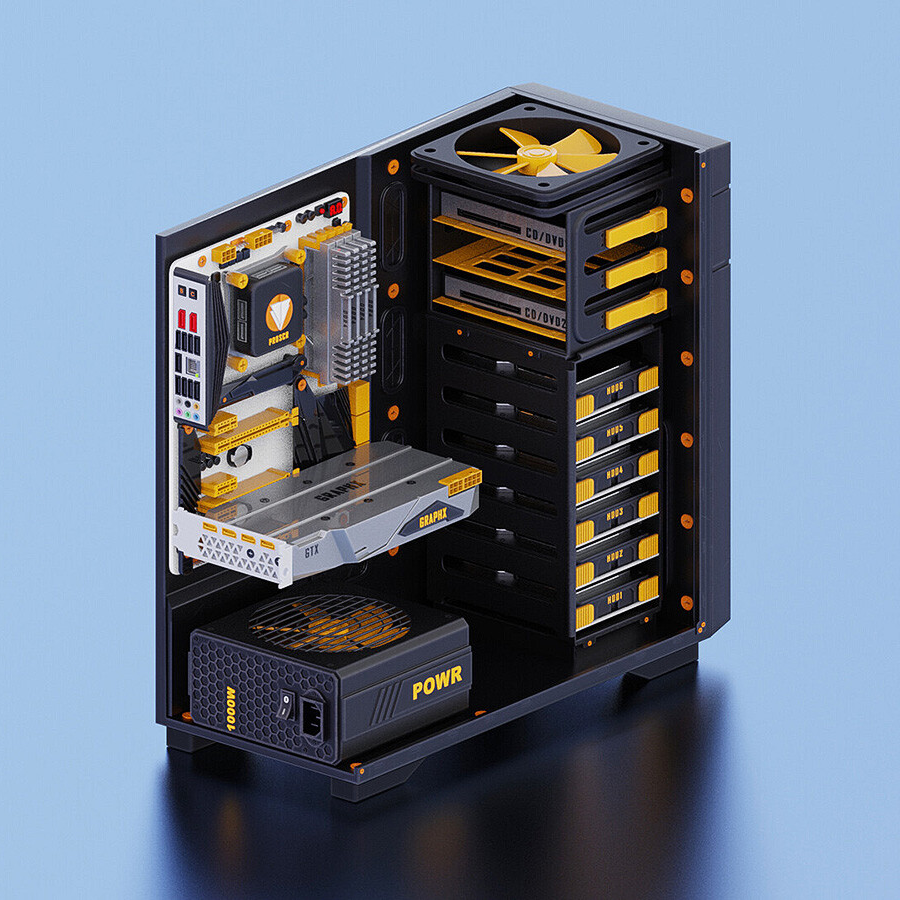
I did it all manually. Opened up an eBay search and started filtering, scrolling, and clicking, entering the data into a spreadsheet as I went. When I was happy with the sample size, I copy-pasted from the spreadsheet into a text file, found/replaced tabs w/ pipes, and then copied into the Lemmy post. Not the most graceful or time efficient, but sometimes I don’t mind toiling in pursuit of sick deals on used electronics.
Wait, how does one tell this is a female cat? (unless kleinfelter’s etc)
The moving parts of the garage door are on the bottom side of the rail, right?
From their GH:
Hollo is a simple, single-user microblogging tool powered by Fedify. It lets you run your own little corner of the internet: think of it as your personal Mastodon instance, but stripped down to the essentials.
I love the idea of Pixelfed and briefly checked it out a couple years ago, bounced off it b/c hash tags weren’t federated, and other issues that I don’t remember the specifics of. For example, when I click on #cats in a photo caption, I want it to show me photos across all instances w/ that hash tag, like the “All” feed in Lemmy.
I don’t wanna poo poo on something that is essentially a free service for plebs like myself, but I remember things being just broken/ incomplete enough and it seemed like its original creator had already moved on to other projects that I filed it under “things w/ potential that aren’t quite there yet (and may never get there).”

How do you connect your disks to your host machine? Are they in an external cage w/ SATA-to-USB adaptors or mounted internally to SATA ports?
raspberry pi and an HDD with family (remote)
Is this the way to go for off-site backups w/ family? In terms of low power draw, uptime, etc.
That’s a handy tool, thanks for posting it. Do you happen to know how the lists are sorted? It’s not alphabetical.
It just can’t. This candle is burning fast at both ends.
I hope you’re right b/c right now feels like the classic “market can stay irrational longer than we can stay liquid” type situation.
you can use one of a million Jitsi instances (Element has a publicly available one)
Is there a list of public Jitsi instances? I know about https://meet.jit.si/, but otherwise I’m stumped. Searching DDG for jitsi instances returns a bunch of results about self hosting.
Thank you for posting this!
Reading Josh Meissner’s article about the acquisition of bike route sharing app Komoot has reinforced the importance of promoting and fostering community-owned services.
I’m not sure how to reach the owners of the https://furtherheights.com/ instance of wanderer, but visiting their website results in a 1033 error. The next instance I tried (https://trails.tchncs.de/) works as expected, though!
I also posted this question in another comment thread, but is there no way for an app to say “give me communities only” or “give me users only” when calling the webfinger lookup thingy? Because if there is, then Mastodon devs could update the behavior on their side to depend on whether the name starts with @ or ! (the same way Lemmy apps do).
Is there no way for an app to say “give me the community only” or “give me the user only” when it calls the webfinger lookup thingy? Because if there is, then Mastodon devs could update the behavior on their side to depend on whether the name starts with @ or ! (the same way Lemmy apps do).

Hope the show’s as good as the trailer! 🤞

It’s also important to make sure the code makes sense and is documented so whoever reads it 2 years from now (be that you, someone else, or I guess another llm) will understand what they are looking at.
Fair points, although it seems to me the original commenter addresses this at the end of their first paragraph:
Then review the entire git diff and have it refactor as required to ensure clean and maintainable code while fixing any broken tests, lint errors, etc.
10 commodity SSDs through a powered USB hub forming a poor man’s NAS with snapraid + mergerfs
How did you end up with this setup? Did you just already have a bunch of SSDs from over the years? That’d be cool af if you posted a photo of it.
For the NAS, what do you use for storage? Do you have an external drive hooked up via USB or something else?
Thanks for clarifying. If I understand correctly, you’re saying that in terms of energy usage, a thin client + external docking station for HDDs might have a smaller footprint than an ITX build, but at the expense of future upgradeability. On the other hand, an ITX build would likely draw more power than the thin client + external HDDs, but enables me to upgrade individual components down the road. Did I get that right?
















Full size tower or micro?
If micro, then is the 4TB HDD an internal 2.5" form factor or something else?