
You must log in or # to comment.
I get that a close connection between a for-profit company and a charity is a red flag but I don’t really see an issue in this situation based on the information in the article. They don’t give same year numbers or how many wreaths are delivered so this quick math is definitely not correct but 21.5 million divided by 3 million (number of volunteers) is $7.17 per wreath. That incorrectly assumes that the charity’s payment is the same year to year but it also assumes that each volunteer will only lay one wreath and that the for-profit is only providing wreaths. The number should be a ballpark. The company gets the majority of its income from the charity but it doesn’t appear to be taking advantage of the charity. Is there more information that shows that there’s a problem with how the charity operates?
The problem is the charity is buying from the charity founder’s farm. That’s a huge conflict of interest.
Also, I think of all things charity, lying wreaths on graves is a pretty damn inefficient use of resources.
but it makes us feel all warm and fuzzy about their sacrifices and less likely to challenge leadership when the next “war on whatever” happens.
The article indicates that the bid process for the wreaths is open to other vendors and administered by a third party. Yes the relationship is a red flag but the article says that they make all required disclosures and there aren’t any indications that they’re doing anything illegal or unethical. The guy founded the charity, it looks like he believes in the cause and is willing to provide the wreaths for the lowest price.
As to your second point, I accept that you don’t value the charity’s cause. I don’t either, I don’t see dead bodies as having value beyond their usefulness for medical donation and research. I say harvest what’s useful and compost the rest. We’re in the minority though. Culturally, and emotionally for many families, graves have value and caring for graves is a way to remember the deceased individual. It’s what the charity was founded to do and, according to the article, is the primary source of the charity’s income. Having different values and priorities from the charity isn’t really applicable to what’s presented in the article.
Blah blah blah, conflict of interest, tax evasion disguised as philanthropy is fucked. End of story.
I have volunteered for this several times, including on time in DC.
My wife’s best friend was even a main fundraiser for them, at one time.
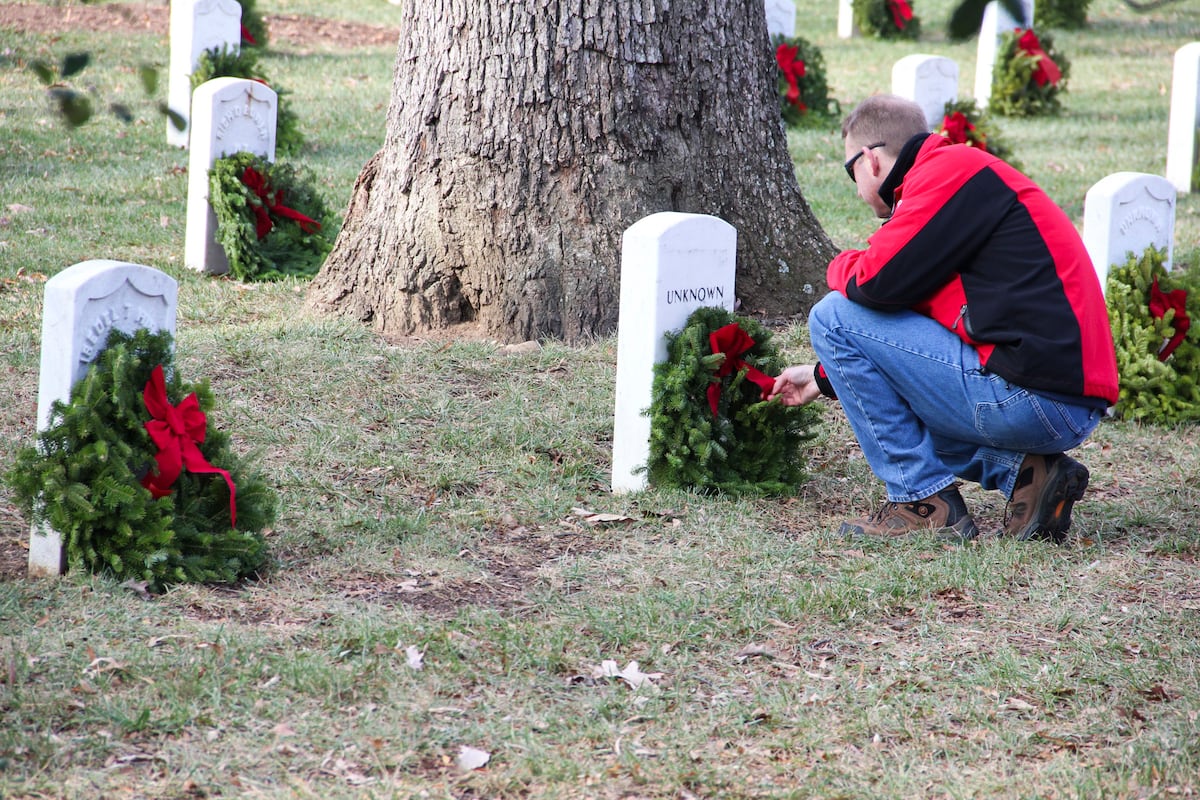
A. I enjoy it because I felt it was a way to honor someone’s memory and make a connection between them and the world they left behind. Christmas time, in particular, is a challenging time for both those deployed, and for those left at home. So displaying this kind of symbolic gesture at Christmas time is meaningful for a lot of folks. These kinda of things are really for the living, not for the dead. Watching Shadys wife place a wreath with the child he never knew was particularly heart breaking for me.
B. It started out as them trying to do something with scraps from their tree farm and it became so incredibly popular and demand so high, that’s all they do now.
C. Almost all the logistics and people are donated/volunteer. So the cost of each wreath mostly goes to the company. I can’t speak to how much the owners profit, though I do know they give a significant portion of their profits back to the charity and send some money back to the local wreath organizations.