

- cross-posted to:
- hackernews
- cross-posted to:
- hackernews
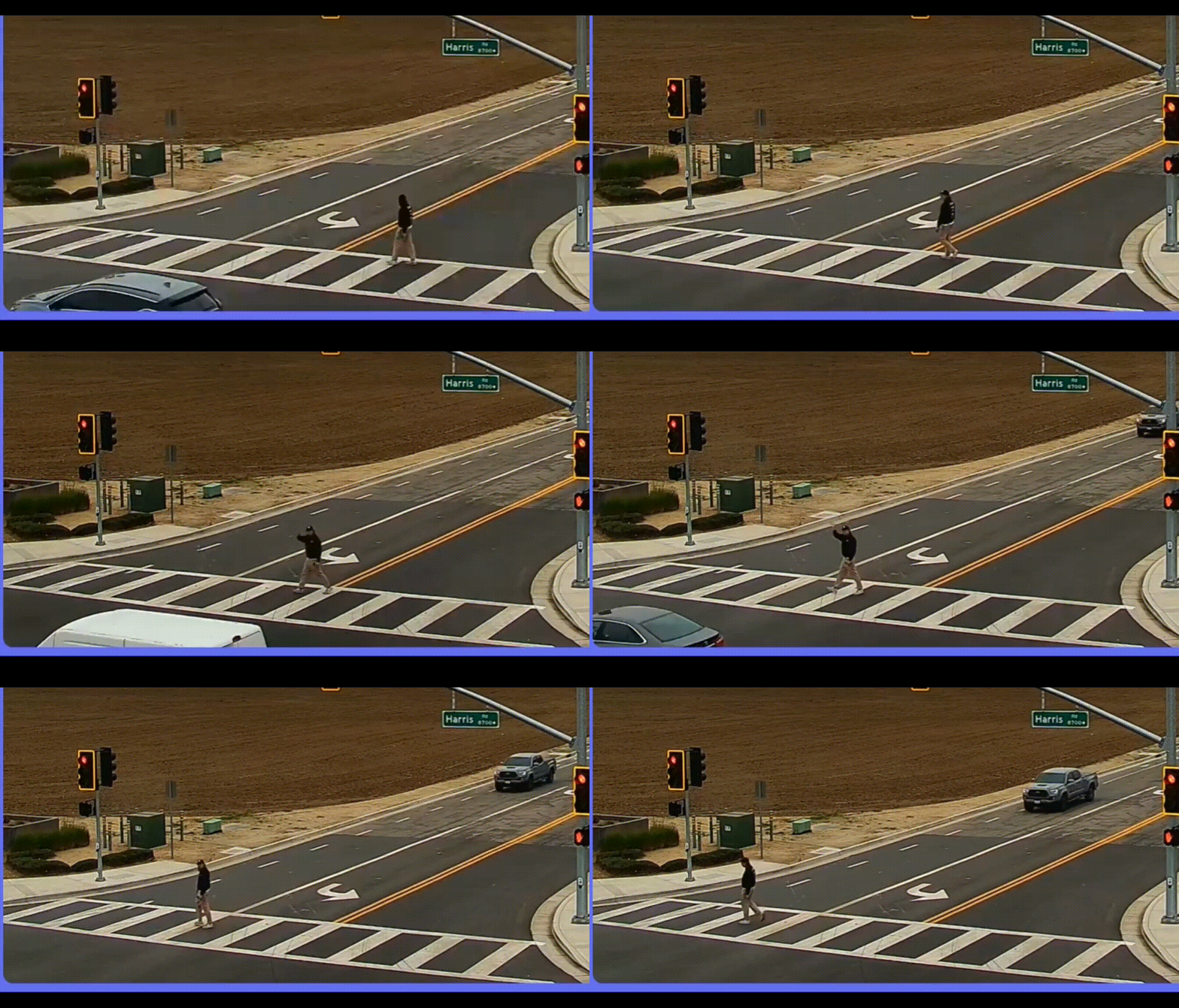
I am standing on the corner of Harris Road and Young Street outside of the Crossroads Business Park in Bakersfield, California, looking up at a Flock surveillance camera bolted high above a traffic signal. On my phone, I am watching myself in real time as the camera records and livestreams me—without any password or login—to the open internet. I wander into the intersection, stare at the camera and wave. On the livestream, I can see myself clearly. Hundreds of miles away, my colleagues are remotely watching me too through the exposed feed.
Flock left livestreams and administrator control panels for at least 60 of its AI-enabled Condor cameras around the country exposed to the open internet, where anyone could watch them, download 30 days worth of video archive, and change settings, see log files, and run diagnostics.
Archive: http://archive.today/IWMKe
Most of those public streaming cams are streaming to a private server, and not 40k cameras contributing to the same global database. They’re also not being tracked with AI and storing license plate numbers, facial recognition, etc. to be categorized and later searched by law enforcement for, whatever reason they want.