

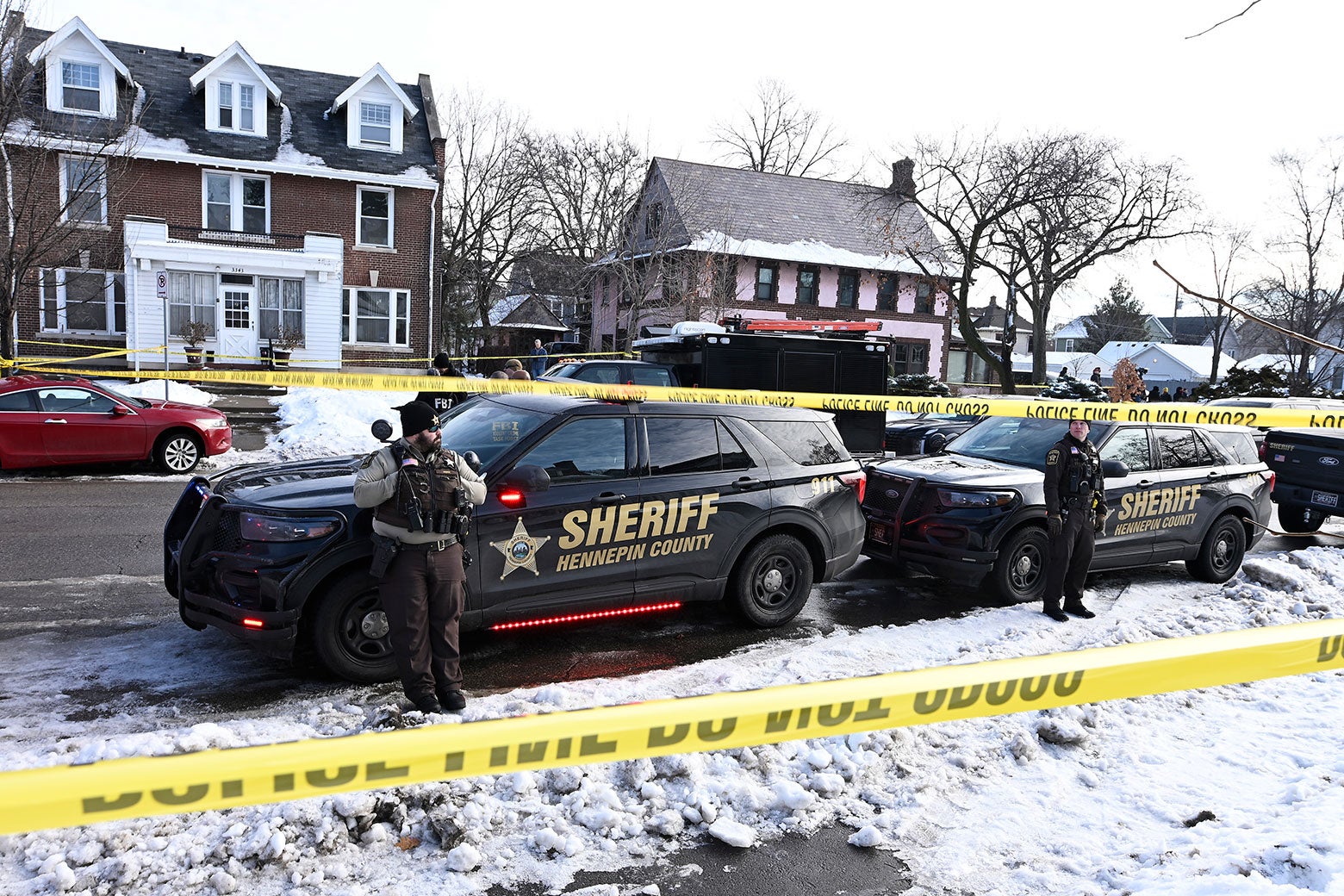
Shortly after a U.S. Immigration and Customs Enforcement officer shot and killed a woman in Minneapolis on Wednesday, city leaders began looking into whether the officer had violated state criminal law.
Minneapolis Mayor Jacob Frey said, “We collectively are going to do everything possible to get to the bottom of this, to get justice, and to make sure that there is an investigation that is conducted in full.” Police Chief Brian O’Hara followed up by saying that the state’s Bureau of Criminal Apprehension is “investigat[ing] whether any state laws within the state of Minnesota have been violated.”
If they conclude that state law has been violated, the question is: What next? Contrary to recent assertions from some federal officials, states can prosecute federal officers for violating state criminal laws, and there is precedent for that.
Right, but I’m saying, that that state is going to attempt to prosecute, and the Feds are going to say it should be a federal trial, and drop charges. Are you saying the state would refile charges? Can you do that? You have already filed them, the feds said it was a federal issue, then refused to prosecute.
I guess where I’m confused is, if the it went to federal court, it wouldn’t be tried in state court, correct?
Or, are you saying, it can be both? Which, I can understand that, but, again, I don’t see how the state prosecutes, if the federal court rules that it’s a federal offense, not a state offense.
Edit: I’ve looked into it, involving federal agents, the case can be removed to a federal judge to oversee the states proceeding.
Right. Understood. The state prosecutor files charges in a state court
Right. The federal prosecutor files charges in a federal court.
The only charges the feds can drop are the charges in federal court. So there are no more federal charges.
I’m saying the state never dismissed the charges in state court. They don’t need to refile anything; the state charges are still filed.
That is incorrect. The state and the federal government can both decide they want to prosecute. Luigi Mangione, for example, faces charges in both New York and Federal courts.
I was about to bring reference to Luigi into the discussion you help clarify the point you were trying to make to the other individual because it was an active example and noticed at the very end of your comment that you did so yourself. Like you I’ve struggled with accepting this in the past but it seems perfectly situated for the current landscape of states attempting to function under a corrupt fascist federal regime. In the past a state would commonly not pursue charges that were satisfied by federal procedure but that was because generally those procedures were able to be respected by the state’s.
Okay and when the federal government removes the state judge from the state case and appoints a federal judge, what then? The federal judge is now hearing the case on behalf of the state.
That’s not a thing that can happen. The state supreme court can substitute another state judge, but the federal government does not have the power you describe.
28 U.S. Code § 1441 & 1442 disagree.
28 USC 1441:
28 USC 1442:
Apprehension or punishment of criminals: The president’s position is that ICE is repelling an invasion, not enforcing law. The president’s argument against Birthright Citizenship, and his entire justification for non-judicial deportation is that the immigrants in question are not “criminals”, but foreign nationals not subject to the laws of the United States. The detainees are not considered criminals; they are not afforded the rights of criminals. Since the president’s executive order on birthright citizenship, ICE actions in general are not for the apprehension or punishment of criminals.
Allowing the case to be moved to the district court on these grounds would set a more important precedent than the murder charge.
The other categories do not apply to ICE agents.
I agree with you wholeheartedly. I do believe we have people deranged enough to try. Thank you for the comprehensive breakdown. I certainly do not know the nuances of law, just what I gathered.