

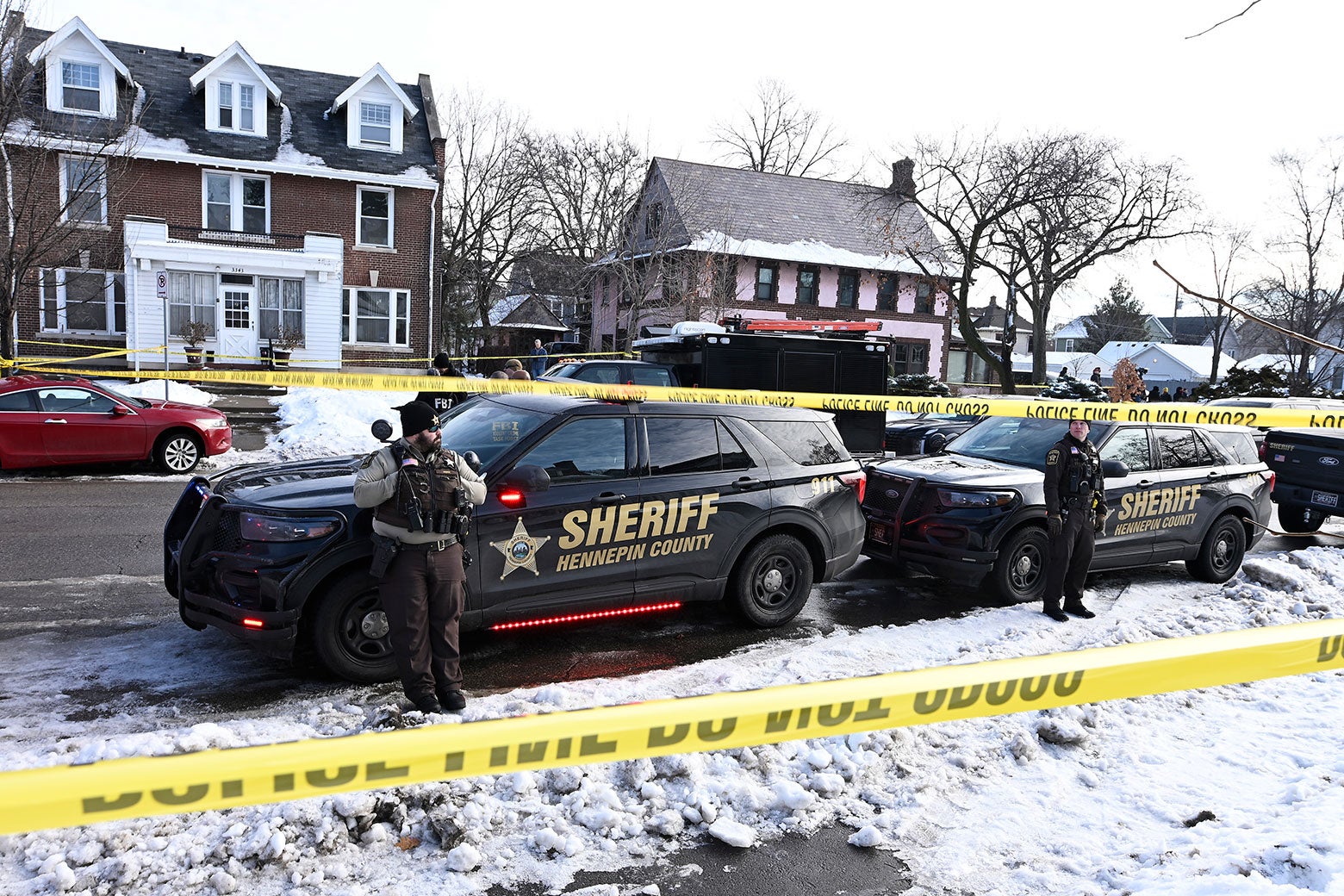
Shortly after a U.S. Immigration and Customs Enforcement officer shot and killed a woman in Minneapolis on Wednesday, city leaders began looking into whether the officer had violated state criminal law.
Minneapolis Mayor Jacob Frey said, “We collectively are going to do everything possible to get to the bottom of this, to get justice, and to make sure that there is an investigation that is conducted in full.” Police Chief Brian O’Hara followed up by saying that the state’s Bureau of Criminal Apprehension is “investigat[ing] whether any state laws within the state of Minnesota have been violated.”
If they conclude that state law has been violated, the question is: What next? Contrary to recent assertions from some federal officials, states can prosecute federal officers for violating state criminal laws, and there is precedent for that.
First, disclaimer, I hadn’t looked at the Minnesota statute, so I was only speaking a general model code approach. Second, I don’t know if the intent would be to try the ICE guy under this standard since he wouldn’t usually fit the definition of a law enforcment officer (“peace officer”) under Minnesota state law.
But, also, that language is a lot less generous than you’re making it out to be. The broader legal concept of “…known to or perceived by the officer…” still points to a “reasonable officer” in their shoes. The “known” and “perceived” are more about things like “dispatch said the suspect has a weapon” or “he reached into his pocket and drew a gun (which later we found out was a toy).” If an officer used deadly force in that situation, they’d be evaluated based on their actions without perfect hindsight (the knowledge that the gun was fake), but still under the “reasonable officer” standard. And their perceptions still need to be within the bounds of credibility and reality.
In this case, ICE guy would have to be able to say something like “the wheels were turned towards fellow Officer White” and “the woman revved the engine and lurched forward, making me believe he was going to be struck” and then those things would have to be articulable perceptions of events at the time. They’re still going to be able to be questioned and the jury could disagree with their stated perceptions (lies). And after that, his response (the shooting) would be evaluated by the jury based on if his actions were reasonable for an officer in his shoes.
The language around “quick judgements” is speaking more to an reasonable mistake of fact (fake gun for real gun) in the situation. This is a bit of a legal shield for them, but doesn’t excuse wildly incorrect judgements outright. And, no, this statute doesn’t speak specifically about training, but this language applies to what Minnesota deems “peace officers,” and there are requirements for certification and training in those statutes and administrative codes.
And I think we can agree to disagree on the idea that him doing something stupid doesn’t have bearing on whether the shooting is justified under the law. That statute has a requirement for deescalation, for example. My reading of the Minnesota statutes is that they actually set a very high standard of expectation for their prace officers (as far as US law enforcement goes). Whether or not they actually hold them to those standards? Hard to say. But, at least according to stats I could pull in a quick google, they’re 45th in police killings, so… good for them?
But I agree that it’s tough to get a jury to come back with a conviction. I’d argue that a large part of that is because of the deep deference courts give to law enforcement and how much that taints trials against the police. Plus, here, it’s likely it’d get removed to federal court, which makes it even more suspect right now. And that’s assuming they overcome federal supremacy/immunity stuff and bring state charges at all. It’s infuriating because I can’t not see this as blatant violations of Constitutional protection and so it should be a slam dunk case against the ICE agent at the federal level (and probably the state level).
It’d be interesting to see how a jury of Minnesotans would feel, given the totality of the circumstances.
This is a very reasonable take but I simply don’t think it works like this in US. It’s not “the wheels were turned like that and he revved the engine and so on”. It’s “I looked to me like like she is going to hit me” or “I thought she is going to drag officer X”. It can be obvious from the video that he was wrong but you can’t really prove it didn’t looked like that from his perspective. It’s stupid and it shouldn’t work like that but this is how justice system treats cops in US. Daniel Shaver and Philando Castile are some cases that come to mind. 100% unjustified police murders that got acquitted by a jury because the guy looked behind him in first case or reached for his documents in the second. The standard is extremely low and if the defense can come up with any justification it will most probably work. In this case the justification is stronger than in those two cases. She didn’t follow orders, she was driving when ICE agent reached inside her car and she didn’t stop when the shooter stepped in front of her car. If he gets convicted it will mark huge shift in public perception of law enforcement. It’s possible but it would be unprecedented.
Absolutely. I really am arguing for how the law is written, but it’s unfortunately just not applied fairly to police. Americans should demand that it is, especially since protection from the government is the whole point of major sections of the Constitution.
Shaver’s a great example of how excluding evidence is used to just 100% give the case to the cops. They couldn’t use the video OR the “you’re fucked” engraving on the cop’s gun? Fuck outta here with that. Maybe you can make the prejudicial > probative argument on the etching, but… no. And the video being excluded is just beyond the bounds of reasonable.