

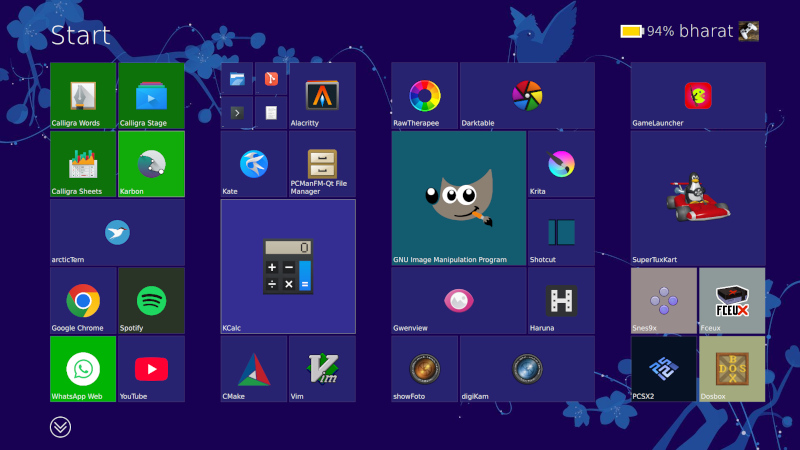
If you were asked to pick the most annoying of the various Microsoft Windows interfaces that have appeared over the years, there’s a reasonable chance that Windows 8’s Metro start screen and interface design language would make it your choice. In 2012 the software company abandoned their tried-and-tested desktop whose roots extended back to Windows 95 in favor of the colorful blocks it had created for its line of music players and mobile phones.
Consumers weren’t impressed and it was quickly shelved in subsequent versions, but should you wish to revisit Metro you can now get the experience on Linux. [er-bharat] has created Win8DE, a shell for Wayland window managers that brings the Metro interface — or something very like it — to the open source operating system.
The most beautiful horror to ever exist lmao
The few people I know who had a Windows phone really liked the UI, the platform was just mismanaged by Microsoft. For example, they already had a problem with having too little apps in their store and then they broke app compatibility between Windows phone 7 and 8. I guess Google intentionally breaking compatibility of their services on Windows phones didn’t help adoption either.
A bit ironic when Microsoft struggles because someone else keep breaking compatibility. Although I would prefer it to keep trying because that would have been more choice and competition in the mobile OS land
Microsoft windows has historically had pretty great backwards compatibility compared to macos, android or iOS; and pretty great device compatibility compared to basically everything.
I think this is because they are forced to because of how many companies didn’t want to update software to the latest OS. I remember the times when Microsoft had all sorts of compatibility issues with XP.
Yeah, I had in mind their office they changed every now and then to break compatibility with FOSS office, afaik this is not the only thing they did like that, but support for running old software usually was decent, true