

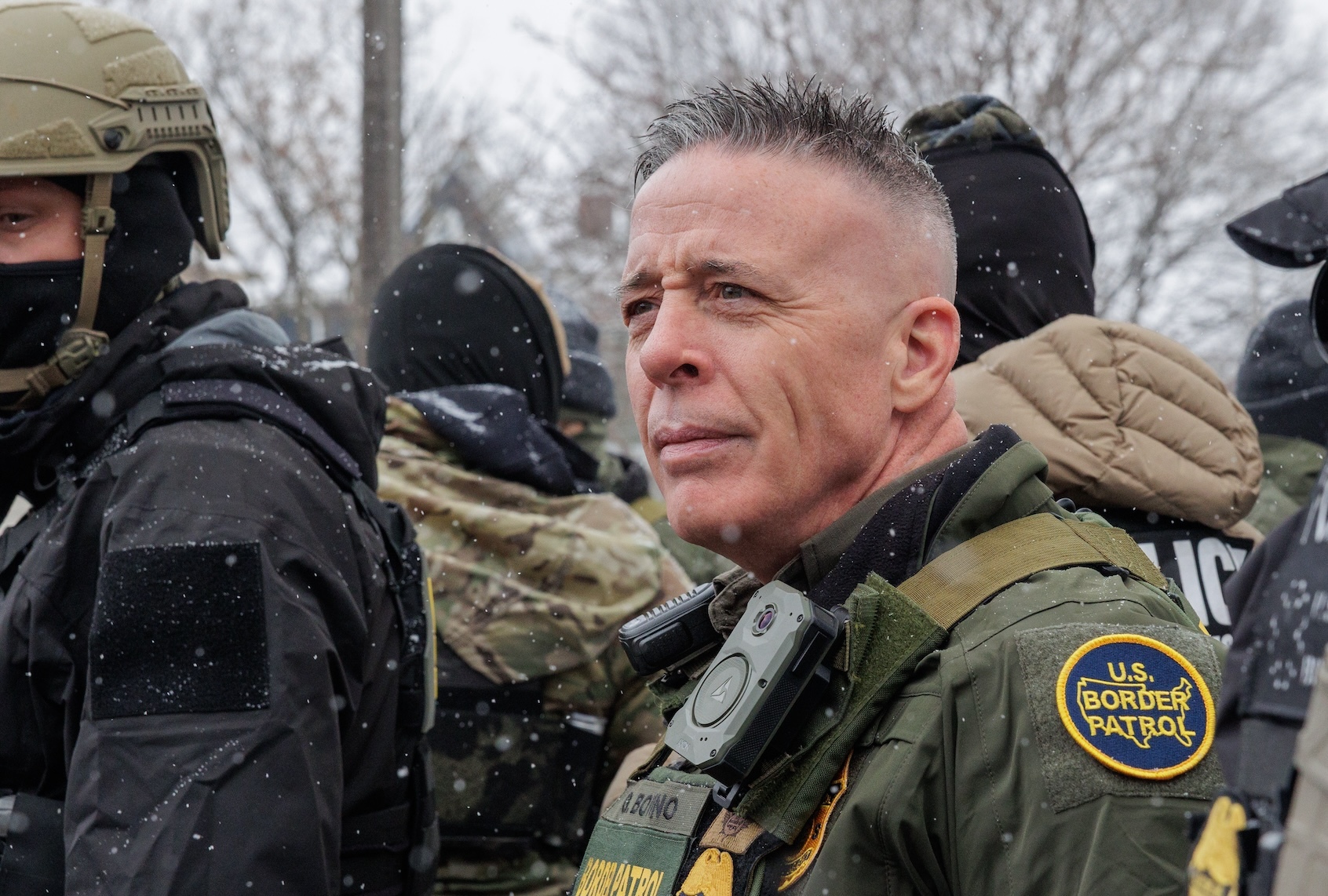
In a heated interview with CNN‘s Dana Bash on Sunday, Border Patrol Commander Gregory Bovino said his agents were the real “victims” in the fatal shooting of a Minneapolis protestor.
Alex Pretti, a 37-year-old Veterans Affairs nurse, was killed by Border Patrol agents on Saturday. In videos of the deadly altercation between Pretti and several agents, he can be seen placing himself between an agent and several women that he was shoving. Pretti is sprayed with a chemical irritant and then wrestled to the ground, where one agent repeatedly hit him in the head with the irritant’s metal canister. Pretti, who was legally carrying a firearm, was fatally shot by agents while on the ground.
DHS immediately painted Pretti as a threat, saying that officers feared for their lives because Pretti was legally carrying a firearm. Multiple videos of the shooting contradicted the official line that Pretti was threatening agents. On Sunday, Bash pressed Bovino for evidence “that he was intending to massacre law enforcement.”
When Bash repeatedly asserted Pretti’s right to carry his firearm, Bovino made the bold claim that Pretti forfeited his Second Amendment rights via his actions.
Well, discounting the fact that it probably did also serve as means self-defense in an era and place where any form or central peacekeeping force would have logistical difficulties coming to anyone’s rescue in a timely manner:
Way back when the colonies had newly and violently won their independence, the idea of just voting a corrupt government out of power would have been laughable to them: What if that government prevents that vote from taking place at all? Why would it respect what a bunch of unarmed civilians have to say? How would those civilians stand up to the might of a professional army under control of that government?
Because of those concerns, they greatly reduced the size of the army after the war was over, so no central government could wield such power again. Instead, citizen militias were formed that, if necessary for defense, would convene and fight together, but couldn’t individually take over the country. Thus, there needed to be a constitutional right for those militias to arm themselves. Essentially, it was a way to decentralise military power.
It should also be noted that “arms” back then will not have been the automatic guns we have today. A single gunman wouldn’t have done as much damage in the same time as modern-day shooters can. As so many other laws, it’s something made ages ago and never adapted to the changing times.
(But also, I’m not really sure how you’d hold such a plebiscite today either. Even if there was some law to formalise it, I imagine it would face the exact same issue: being suppressed by said corrupt government.)
Yes, the whole ‘well regulated militia’ part is key, and is pushed aside.
In fact, if Minnesota had their state guard still, could be awfully handy right about now… Though it looks like the federal military frowvs upon states making significant investments along those lines…
But in general, that was written at a time when they didn’t imagine maintaining a sufficient federal military and when, like you say, the best firearm a civilian could have rivaled the firearms the military could have and, in an individual context, were generally less useful than blades, since reload time made them impractical for a one to many engagement.
Yeah, obviously the federal government and its organs would prefer to centralise power. That’s not a (good) reason to give up state power, particularly given the historical context, as is now becoming painfully obvious.
In a way, it’s a far more macabre version of the motivation behind the Fediverse: Central power is much easier to abuse.