When I was signing my residency paperwork they kept stressing how it must be the same as my passport signature. I never studied my scribble so much, even so it was only somewhat close.
It that VLC
Doesn’t matter, everyone knows your signature is just a scribble that starts with something sort of resembling the first letter of your name and then just doodles for the rest
Really all it’s good for is for you to identify whether or not you signed something.
Mine isn’t even consistent, I can never remember how i did it last time so I just doodle something
Beauty of handwriting is that it doesn’t even need to be consistent for an expert to determine with pretty high accuracy whether or not it’s coming from the same person. A physical signature is actually a pretty decent way to verify that a specific person really did sign something.
I thought that was debunked as unreliable pseudoscience
I’m no expert, but a quick Wikipedia search was enough for me to not immediately brush it off as pseudoscience.
It’s not claimed to be exact of course, but it does appear to me that consensus is that it can be done with reasonable accuracy.
What you can’t do is determine if someone is a criminal or not, but the way someone writes is usually pretty concrete, because the patterns of muscle movements the brain has encoded to mean “write these letters”
I know my scribbles well enough to know it was me that did it.
Assuming that this is the US (and I strongly suspect, many other jurisdictions), your signature doesn’t really need to be your name at all. It just needs to be some distinctive mark that shows your intent to commit to the document. Illiterate people used to use symbols or whatnot.
searches
WP isn’t as in-depth as I’d like, but it does mention this:
https://en.wikipedia.org/wiki/Signature
In the United States, signatures encompass marks and actions of all sorts that are indicative of identity and intent. The legal rule is that unless a statute specifically prescribes a particular method of making a signature it may be made in any number of ways. These include by a mechanical or rubber stamp facsimile. A signature may be made by the purported signatory; alternatively someone else duly authorized by the signatory, acting in their presence and at their direction, may make the signature.[2]
It’s just useful to use your name in cursive. People tend to develop their own cursive writing style and historically lots of people learned to write in cursive (though that may be coming to an end). But…not required.
Side note: I’ve been playing around with fountain pens recently, and I just realized that I’d been writing my "d"s incorrectly for some decades. I’ve spent a lot more time over the years typing, if I need to deal with any significant amount of text, so I really haven’t spent all that much time on my handwriting. I spent a few days slowly retraining decades of muscle memory. I can fairly consistently do it the correct way now, and it actually looks rather nicer. If you want to sit down and practice a bit, you really can make it look nicer, though it’ll take some not-very-exciting time investment where you just handwrite text and tweak how you write based on your output.
At the US passport office, there’s a sheet on the desks showing how to write each letter as cursive. I think that they only accept signatures written in cursive, based on what I heard.
So how can it be your signature is they can tell you that you’re doing it the wrong way?
Edit: from what I read, it’s not a requirement, but they were definitely about to point someone to the chart before seeing that the signature was cursive.
Cursive is easy.
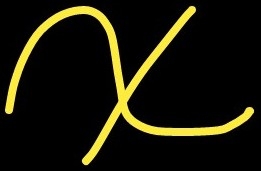
Try shorthands.