The Linux/Mac combo covers just about every computing requirement, even for corporate users. You do not need Windows unless you play competitive online multiplayer games.
Me:
Mac -
Music production software
Adobe software
Some corporate VPNs and VDI access required by some clients
I left Windows 15 years ago (still have to use it for work every so often)… I have yet to encounter something cryptic breaking on Linux
When the things go wrong on Linux, which in my experience is rare, you are basically in Windows territory: reboot if you don’t know how to fix it or reformat/reinstall which is 10 times faster anyway
Right now, my daily driver is a branch of a branch (Garuda Linux which is fork of a branch of Manjaro which itself is a branch of Arch)… it comes with KDE as desktop which is awesome but I felt like experimenting with Hyprland which is not even at version 1.0 yet… and I basically configured it from scratch myself… I also share this box with my son who does use KDE as his desktop which is actually not recommended (KDE Plasma and Hyprland in the same box, I mean)
As per any advice you will find out there, this machine should be like the crazy robot in Futurama that explodes with no warning at any little thing and yet, it’s my daily driver for work, daily gamer for my son… rock solid and smooth… I have had 1 odd freeze I chose not to wait out and just rebooted the box in 9 months, and the freeze happened accessing Windows365 Desktop… go figure
Depends on what end of the corporate world you are working in. I do industrial automation, and there’s no way you are getting out of having a Windows VM at the very least.
For sure. I actually detailed our VDI setup in another thread. We use linux minipcs running VMWare and Win10 IOT LTSC VMs to connect to clients that require Windows or “secured Windows” where they install all sorts of bloatware.
EDIT: I should note that the vast majority of our clients have since moved to VDIs, which can be accessed from Macs. Unfortunately, they mostly use Citrix and I have not found a way to get that citrix client to work well on Linux.
I ran Asahi on an 8/256GB M1 mini for a few months as my primary work machine. Worked perfectly fine, besides the lack of a second screen. Sounds like they’ve finally cracked that though, and are preparing to release the upgrade to general users.
Obviously, software is a little more patchy, but I didn’t truly struggle to fill my needs. Amusingly, I discovered that Mixxx, the DJ software works well on it.
Might put Asahi back on it and use it as my Home Assistant machine, freeing up some processing power from the poor 2014 Mac mini that I’m currently using (with Mint) as my general purpose home server.
They all have their drawbacks. If I could install MacOS on my laptop I would. But you can only install it on overpriced, irreparable, disposable hardware.
The right tool for the job is what I always say. Macs, especially on Apple Silicone, are next to impossible to beat for music production. The performance of those chips and the universal support from hardware and software manufacturers make it the best tool. What I find is that the number of scenarios in which Windows is the best tool is rapidly approaching zero.
I get your point but the truth is that Apple’s M processors do a far better job than Intel and AMD processors do when it comes to this type of work. I started on Linux with Reaper and BitWig but the Macs performance was significantly better. Also, software and hardware support is key. All music gear manufacturers and software vendors support apple, including Apple silicone. You can run many VSTs through comparability layers but the latency is a huge problem and the alteady high CPU demands get exacerbated.
I have been on Linux since very early days and have always been a proponent of it. Music production is just not an niche that is currently as well covered by Linux as it is by Mac. We need a Linux push in music like the one Valve did in gaming. If Abelton and Native Instruments went all in on Linux, I think much of the industry would follow.
I’ve been using my M2 Air to broadcast a radio show for the past couple of years. It’s basically flawless, even using an iPad as a virtual MIDI controller for some of the faders.
I’m currently in the process of replicating the setup on my Linux PC, and fuck me, it’s proving an arsehole by comparison. I’m willing to accept that a good chunk is just me being far less familiar with the OS than with macOS, but it’s considerably less intuitive when it comes to things like hooking up virtual MIDI controllers and the like. I’ll get it sorted, but I won’t be truly happy that it’s broadcast solid for a few weeks yet, I don’t think.
The actual playout software is Mixxx on both, but the underlying MIDI controlling is slightly different. Enough that I’m not 100% on how it works on Linux.


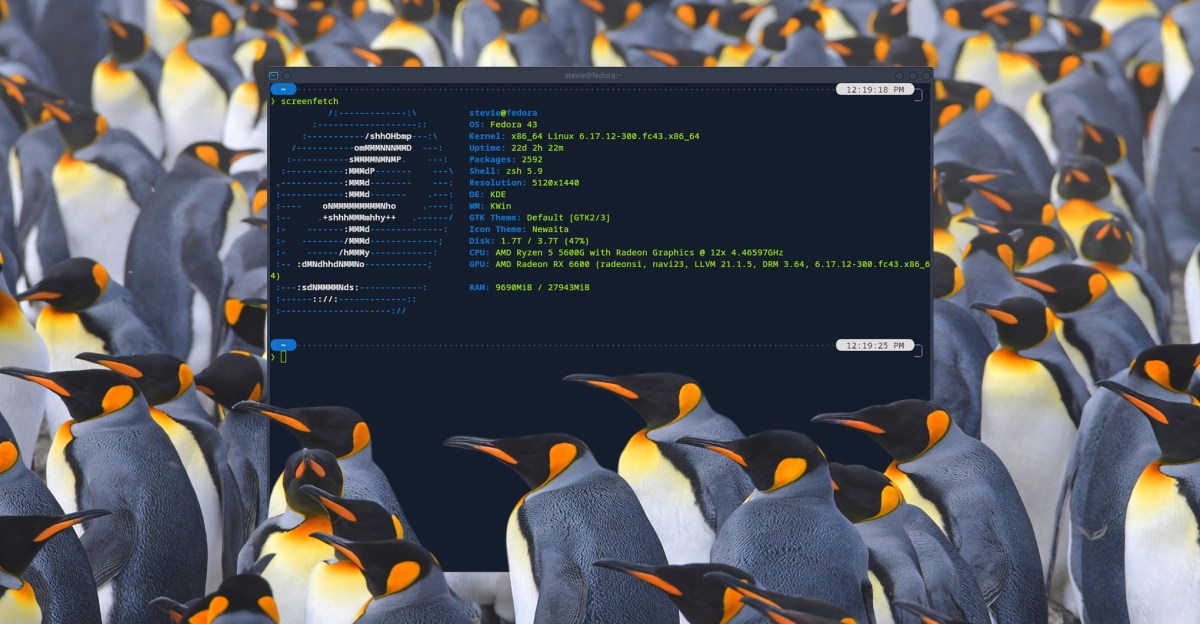
The Linux/Mac combo covers just about every computing requirement, even for corporate users. You do not need Windows unless you play competitive online multiplayer games.
Me:
Mac -
Linux -
True
or unless something cryptic breaks on Linux and no one on the inner net can figure it out.
I left Windows 15 years ago (still have to use it for work every so often)… I have yet to encounter something cryptic breaking on Linux
When the things go wrong on Linux, which in my experience is rare, you are basically in Windows territory: reboot if you don’t know how to fix it or reformat/reinstall which is 10 times faster anyway
Right now, my daily driver is a branch of a branch (Garuda Linux which is fork of a branch of Manjaro which itself is a branch of Arch)… it comes with KDE as desktop which is awesome but I felt like experimenting with Hyprland which is not even at version 1.0 yet… and I basically configured it from scratch myself… I also share this box with my son who does use KDE as his desktop which is actually not recommended (KDE Plasma and Hyprland in the same box, I mean)
As per any advice you will find out there, this machine should be like the crazy robot in Futurama that explodes with no warning at any little thing and yet, it’s my daily driver for work, daily gamer for my son… rock solid and smooth… I have had 1 odd freeze I chose not to wait out and just rebooted the box in 9 months, and the freeze happened accessing Windows365 Desktop… go figure
Depends on what end of the corporate world you are working in. I do industrial automation, and there’s no way you are getting out of having a Windows VM at the very least.
For sure. I actually detailed our VDI setup in another thread. We use linux minipcs running VMWare and Win10 IOT LTSC VMs to connect to clients that require Windows or “secured Windows” where they install all sorts of bloatware.
EDIT: I should note that the vast majority of our clients have since moved to VDIs, which can be accessed from Macs. Unfortunately, they mostly use Citrix and I have not found a way to get that citrix client to work well on Linux.
I mean, for that pretty much everyone uses Windows VMs on Windows as well
Macs can also make a good home server because the m chips are quite powerful relative to their power draw
We tried. Unfortunately, M chips require ARM operating systems as VMs, and they perform very poorly.
Linux servers are still the best option.
Yes, I just have simple needs so I run some services bare on it
How does Asahi perform, have you tried?
I have not tried it. Once I upgrade my M2 MBP (might be a while), I will.
I ran Asahi on an 8/256GB M1 mini for a few months as my primary work machine. Worked perfectly fine, besides the lack of a second screen. Sounds like they’ve finally cracked that though, and are preparing to release the upgrade to general users.
Obviously, software is a little more patchy, but I didn’t truly struggle to fill my needs. Amusingly, I discovered that Mixxx, the DJ software works well on it.
Might put Asahi back on it and use it as my Home Assistant machine, freeing up some processing power from the poor 2014 Mac mini that I’m currently using (with Mint) as my general purpose home server.
They all have their drawbacks. If I could install MacOS on my laptop I would. But you can only install it on overpriced, irreparable, disposable hardware.
The right tool for the job is what I always say. Macs, especially on Apple Silicone, are next to impossible to beat for music production. The performance of those chips and the universal support from hardware and software manufacturers make it the best tool. What I find is that the number of scenarios in which Windows is the best tool is rapidly approaching zero.
Seems like an overpriced, irreparable, unupgradeable, and disposable tool would be the wrong tool but what do I know.
I get your point but the truth is that Apple’s M processors do a far better job than Intel and AMD processors do when it comes to this type of work. I started on Linux with Reaper and BitWig but the Macs performance was significantly better. Also, software and hardware support is key. All music gear manufacturers and software vendors support apple, including Apple silicone. You can run many VSTs through comparability layers but the latency is a huge problem and the alteady high CPU demands get exacerbated.
I have been on Linux since very early days and have always been a proponent of it. Music production is just not an niche that is currently as well covered by Linux as it is by Mac. We need a Linux push in music like the one Valve did in gaming. If Abelton and Native Instruments went all in on Linux, I think much of the industry would follow.
I’ve been using my M2 Air to broadcast a radio show for the past couple of years. It’s basically flawless, even using an iPad as a virtual MIDI controller for some of the faders.
I’m currently in the process of replicating the setup on my Linux PC, and fuck me, it’s proving an arsehole by comparison. I’m willing to accept that a good chunk is just me being far less familiar with the OS than with macOS, but it’s considerably less intuitive when it comes to things like hooking up virtual MIDI controllers and the like. I’ll get it sorted, but I won’t be truly happy that it’s broadcast solid for a few weeks yet, I don’t think.
What broadcast software do you usenon the Mac vs Linux?
The actual playout software is Mixxx on both, but the underlying MIDI controlling is slightly different. Enough that I’m not 100% on how it works on Linux.