- cross-posted to:
- hackernews
- cross-posted to:
- hackernews
You must log in or register to comment.
People used to utilize the extra phone wiring in homes and businesses for LocalTalk networking. There are usually two wires for the primary phone line, and another pair for a second phone line. Most people didn’t have a second line, so they were perfect wiring for Farallon phonenet adapters.
Iirc you should check for
continuitycurrent depending on where you live. There could be a minimal amount of power still going through those lines. This could be very outdated info as well since i haven’t done residential contacting in a long time.
Old copper is like Kodak film stock. The past was more future-proof than the present is.
Unless it was laid in the 1950s, in which case it’s probably aluminium wire rather than copper.
There’s an area like that between the local exchange and my house, which meant internet speeds were like living in a time capsule before FTTC came along. Always 25% of what the rest of the town had.
But other than edge cases like mine, I agree. Copper lasts a long time with minimal things to go wrong. Modern solutions like FTTC require their own power, air conditioning, etc.
I thought the aluminium was fine conductivity wise, the problem is that it oxidises and becomes brittle.
Every time a BT man went into the box, it was russian roulette as to whose internet would get broken.
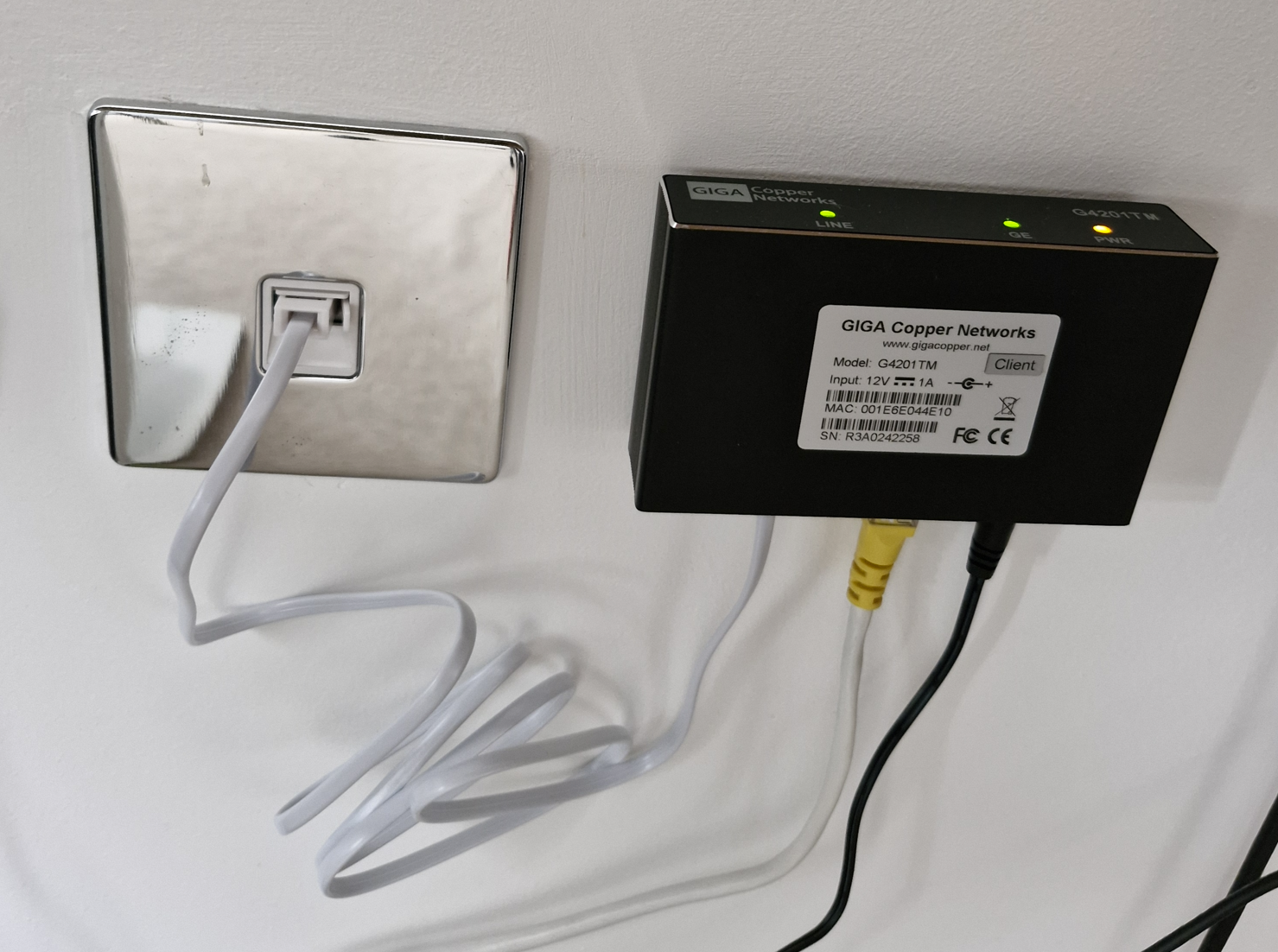
That’s interesting, but those boxes seem rather expensive, wouldn’t it be cheaper to just pull ethernet cable over the phone installation?
The cables are often not run in ducts they’re just tacked to the studwork in the house before the plasterboard goes up. This means any new cable is basically a fresh install.
Most UK house construction doesn’t really allow for retrofitting cables in the way that seems to be common in the the US
Even US houses above a certain age have the same problem.
I couldn’t tell reading the post, but they may be renting instead of owning? They likely can’t do bigger construction tasks like that, so they’re forced to use what they have.
It wouldn’t matter because 4 pair ethernet cable can still transport 2 pair phone signals just fine (if not better), so he could just replace the the sockets back to the old RJ11 ones and the landland wouldn’t ever know that anything was changed.
Either way, reading at the other replies, it seems that houses in UK don’t actually use ducts to pass the cables so replacing the cable is nearly impossible. Didn’t know that.
Poweline should be prohibited. Because people don’t know shit about this (or don’t care). I was able to kill all DSL lines in my house by maxing out the line. My neighbors were clueless what the cause was. Just don’t use unshielded wires for this kind of stuff kids.
Ham radio operators hate it.