You must log in or register to comment.
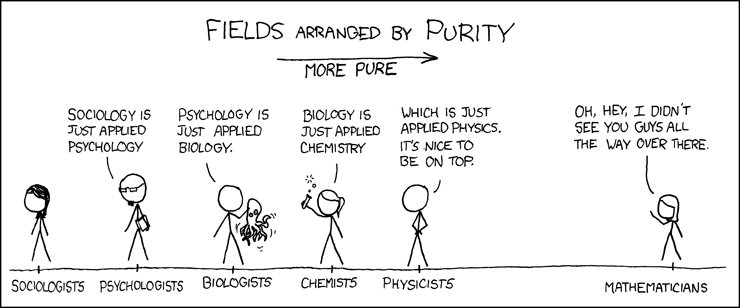
Economics:
Let’s turn this
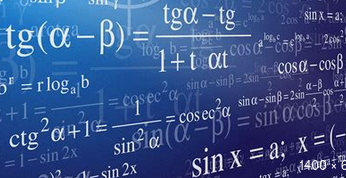
Into this!
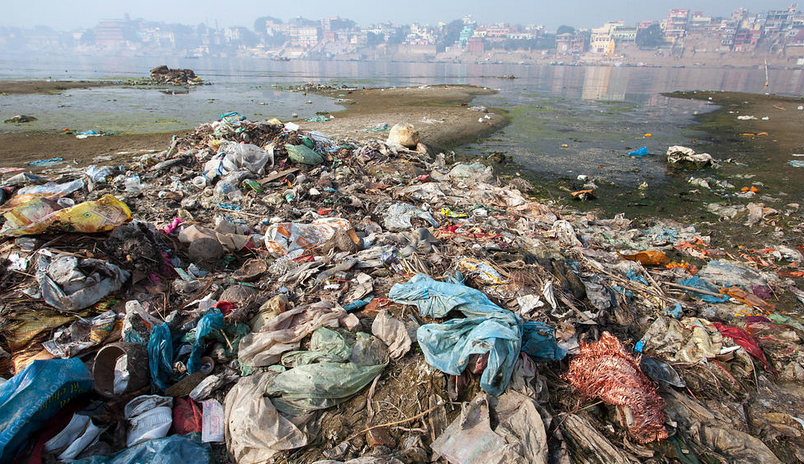
That’s capitalism. There are other forms of economics.
Any “scientific” field that produces Art Laffer is a fraud.
well i seemingly have a very different viewpoint, because the most interesting economics bits are econometrics, essentially data science - the same things all other stem folks use to find the underlying distribution, estimators, their significance, finding the p value. Using this to model whole world is just as wrong as saying all of chem is solved by taking mendelev periodic table. sourely it works, and explains some stuff, but just knowing it does not predict all of chemistry. same way, for example ls-lm model (suppply demand curve) does not explain the whole world, and good economists do not claim they can explain it (sorry for using bad examples, 1 only took 2-3 eco courses).
So the moderator of science memes does not know a single thing about modern economics and its empirical methodology. What a joke.
Economics is just applied statistics with a little sociology mixed in
And simplified until linear relationships appear.
Tell us you dont understand economics without telling us…
Don’t forget the other sibling: IT. Theoretical Computer Science is basically a form of mathematics, with all its algorithms and data structures that you can study and do proofs about.
Save some potato salad for cousin Music!
Music is entirely math though. Just arranged all pretty like.
like, i know some people insist music is math, but in my opinion that music is always lacking emotion. i prefer my music more on the side of folk song: not much math but a lot of passion in it.
I like both. Classical and prog rock both famously have a lot of math in them and I love them as genres. But also I kinda want a banjo to belt out some Seeger
Writing a png file by hand currently and ngl this feels like 90% law school (or whatever these “rules” fall under) and 10% math.
ITT: People who have never studied economics incorrectly diagnosing all of its problems
Economics, as an intellectual discipline, is closer to theology than physics. Its power is proportional to the belief it commands.
Finance is an arbitrary subset of mathematics, cherry picked to retroactively support a given economic model, and applied as its supporting mythology.
It’s entirely imaginary, which means alternatives are only ever a conjuring away.
economics is definitely closer to law studies than to theology. i mean, look at all the ownership relations and having to know what is proportional, how to run a business, rules and regulations, and such.
fun fact: theology was a respectable thing in the medieval ages. it was closer to maths/logic and spoke about how to organize a society and run a state. There were lots of influential people who studied maths but were also theologists, and lots of people studied theology and became mathematicians. I mean check out Isaac Newton who revolutionized physics with his maths-approach but also studied theology heavily. Check out Gottfried Wilhelm Leibniz who revolutionized mathematics but studied philosophy/theology. There’s a lot of overlap.
Theology, back then, was basically a mixture of logic/mathematics/how to organize a society/politics/and some metaphysics and philosophy. It was not a “make up random stuff” thing at all.
All of that changed in the modern age when theology became a cringe-worthy niche with basically no real content. Idk how exactly that happened. In the medieval days, however, it was one of the big three studies: theology (math), law (and economics), medicine.
Yeah theology is “given these base assumptions and this text, interpret the will and nature of the divine.” I can respect a person who studied theology at a respected university in all the ways I can’t respect someone who studied preaching at a Bible college. That said I hold a weird amount of opinions on Christian theology for a pagan
Another way I often frame my perspective on this is:
Economics is the social control mechanism that filled the void vacated by religion after the Enlightenment.
Mythology was replaced with finance.
… Churches with banks.
… Clergy with economists.
… God with GDP.I don’t see either as inherently problematic systems, but their lack of rigorous foundational attachment to reality informs my argument that they should be applied as subservient tools, as opposed to their current role as dominant, dictatorial weapons.
it is closer to lobbying and propaganda than theology.
A distinction without a difference. Lobbying and propaganda are basically the prophesizing and scripture of politics.
not going to mansplain my perceived difference between the two, but I think we agree on the jist of it
By dubbing econ “dismal science” adherents exaggerate;
The “dismal”'s fine - it’s “science” where they patently prevaricate.I’m so tired of this flack that economics gets, that it is somehow “lesser” because it is a “soft science.”
Economics does run randomised control trials. Economics does adhere to testable hypotheses. Economics does use rigorous statistics/maths.
You how sometimes grants/government programs are randomly allocated? Those are live, randomised control trials, and if you read the fine print you’ll find a project number for researchers studying the effects of rental subsidies, health insurance, etc, one of which being the Oregon Health Insurance Experiment. Those cancerous recommender algorithms, which are the culmination of millions of live A/B tests? Developed by the Econ PhDs poached by Big tech.
Oregon Medicaid health experiment - Wikipedia - https://en.wikipedia.org/wiki/Oregon_Medicaid_health_experiment
It is true that many hypotheses cannot have experiments run. But this makes it even more impressive when economists find natural experiments. For example, the 2021 Nobel Laureates Card, Angrist, and Imbens studied the effects of minimum wage by looking at the towns on the border of New Jersey/New York, which had implemented different minimum wages. They found that increasing minimum wage did not increase unemployment, completely contrary to ahem conservative wisdom.
The Prize in Economic Sciences 2021 - Popular science background - NobelPrize.org - https://www.nobelprize.org/prizes/economic-sciences/2021/popular-information/
In contrast, many of the supposed “hard” sciences cannot run experiments either, or also adhere to untestable simplifying assumptions. Ecology, physics, geology (just to name a few) all study systems which are too large and complex to run experiments, yet the general public does not perceive them as “soft”.
The difference is that economics is unfortunately one of those fields where lots of unqualified people (read politicians) have lots of strong opinions about, and in turn has a disproportionate influence on everyone. Those criticised austerity measures in the wake of the GFC? That was due to politicians implementing the policies of the infamous “Growth in a Time of Debt” by Reinhart-Rogoff paper, which was published as a “proceeding” and hence not peer reviewed. During the peer review process was found to contain numerous errors including incorrect excel formulas. It didn’t matter - policymakers liked the conclusion, and rushed its implementation anyway.
Growth in a Time of Debt - Wikipedia - https://en.wikipedia.org/wiki/Growth_in_a_Time_of_Debt
If you look into any awful policy, you will see a similar pattern. Even Milton Friedman, as an ultra hard libertarian for advocated for lowering taxes and abolishing all government benefit programs, recognised that poor people need some assistance, and so actually advocated for replacing benefits with a universal negative income tax (an even more extreme version of UBI). It didn’t matter - policymakers of the Reagan Thatcher era heard the lowering taxes and cutting welfare part, and didn’t do the UBI.
It’s a field full of grifters that get lifted up because they tell rich people what they want to hear.
The Chicago School is the driving force behind the rise of neoliberalism, the movement right of Western democracies, and the return of fascism in America.
Yes, there’s good work done in the field. But economists could prove definitively that capitalism is killing us all and that socialism is the only solution to organizing civilisation, and the only economists being platformed would continue to be neoliberal shit heels.
True if your too much of a flunky there’s still the Austrian School
Oh don’t get me started on the I’m afraid of math Austrian school
Its to economics what flat earth is to physics
Economics does run randomised Control trials. Economics does adhere to testable hypotheses. Economics does use rigorous statistics/maths.
Psychology too mate. Both use the scientific method, but the premise that all experiments are under full control doesn’t apply to them.
it’s 90% lobbying and propaganda, 10% math
Economics is basically social psychology with some numbers sprinkled in.
true! maybe with some biology, anthropology, network effects, game theory churned in
Don’t forget gambling.
… And wishful thinking!
So… religion
No joke: Economists do kind of fulfill the role of priests in that they explain the “necessary [fake] world order” to the masses.
Saying “Capitalism is a bad system” gets you comparable comments from economists as “Gods don’t exist” gets you from priests in a religious society. Both comments also get cops on your ass as well (depending on where you live).
They also have to justify how keeping at least 3-5% of people unemployed is a good thing for their economy god. That one and that inflation and growth are required to keep an economy going when we all know that there could be sustainable level existence if the investor class didn’t exist.
Because economist and even business leaders don’t actually have any control over the economy. They try to predict it and make changes, but they have no real power as was shown by COVID and the Ukraine war.
No, surely all will be good if we invest in so-called “AI”, war and the distopian surveillance state. /s
They don’t even disguise it, praxeology is effectively theology without the metaphysics.
I keep calling it a pseudoscience.
Someone told me that I “don’t know what a pseudoscience is” and that I was “using the word wrong.”
No. No, I know what it is, and I used it precisely the way I meant it.
Wayyy too many people think classic economic theory is a legitimate field…
classic economic theory
To be fair, that’s like 150 years old, back when they believed in spontaneous generation, and the idea that continents move was absurd and crazy.
And yet the global economy is still operating on the same basic assumptions…
They’ve been made even worse by further developments of those basic assumptions as expounded by neoliberalism and reaganomics, but the underlying premises are still the same.
The global economy is definitely not being run by economists or anything particularly close to prescribed economic principles. Most countries are being run by some combination of authoritarian and/or populist governments whose economic policy is crafted to benefit either a small ruling class, or to win elections (voted on largely by people who don’t understand economics).
The most obvious example of this is the United States, which is the single largest national economy, and which keeps instituting tariffs despite “tariffs = almost always bad” being one of the first and most foundational tenets of macro econ.
The global economy is being run by capitalist oligarchs, whose central premises for existing are based on classical economic theories (private ownership of capital, extraction of resources, and exploitation of labor), their operational strategies are based on classical economic theories (infinite pursuit of growth at all costs, externalizing risks while internalizing profits, quarterly profit margins being the sole indicator of growth, cutting costs to minimize expenses and manufacturing scarcity to maximize pricing, etc.), and the policies meant to regulate and/or stimulate economic activity are based on classical economic theories (austerity for the poor, supply-side “trickle-down” economics for the rich including tax breaks, subsidies, and bailouts).
The tariffs are an exception attributable to the overt buffoonery of an extortionist grifter running the show. It doesn’t negate all the other examples of how classical economic theory is destroying society and the planet.
It’s definitely just Maths with feelings sprinkled on top.
If you read a book by any investor they’ll talk about the irrationality of the market. They’ll say how daytrading should be mathematically impossible, but admit how some people do profit a lot from it.
I wouldn’t call it pseudoscience, because it’s like mixing maths with psychology.
It’s a soft science at best, but some people try to treat it like it’s a hard science.
I still hold that it displays characteristics of pseudoscience by operating on unsound premises and unverifiable assumptions though
I struggle to consider it scientific because it bakes in so many fundamental assumptions without questioning them. At least mainstream economics.

Ah, uh, it’s a xkcd. Expanded by a reddit user, forever ago.
Philosophy is in entirely the wrong place for some reason. Should be slightly to the right of maths.
For this reason it seems closer to religion for me
Don’t all scientific fields rest on fundamental assumptions? I mean, just to pull an example at random, astronomers were hung up on the geocentric model of the universe for a long time before we came up with the heliocentric model, which in turn was ditched for the “no true frame of reference” model we now use. Having flawed assumptions doesn’t make it non-scientific, just incorrect.
What makes a difference is how models are evaluated in light of new evidence. If a model makes predictions that turn out to be incorrect, then a big part of scientific progress is in re-examining the underlying assumptions of the model.
My beef with economics isn’t that it’s often wrong, but that economists are often keen to present themselves as scientists to boost their epistemic authority, whilst also acting in a deeply unscientific way.
The worst economists for this get very offended if you say that economics is a soft science, with more in common with psychology than physics. This offends them because they hear “soft science” as a pejorative. Economics absolutely is a science, but the more that economists try to pretend that their object of study isn’t wibbly wobbly as hell, the less I respect them.
I’d consider economics a subgenre of sociology.
If making unproven assumptions is problematic then physics is in some real deep shit.
I mean, yeah. We don’t have a unified theory of quantum gravity because at least one of our assumptions is off. Science is just figuring out precisely which assumptions are wrong and how wrong they are.
Economists’ math is as good as anyone else’.
The main problem is that economies are incredibly chaotic systems and all the math that humans can actually read described them poorly.
The main problem is that the math they do is often based on assumptions that have repeatedly been disproven but are still treated like gospel.
If you assume 2+2=5 you can follow up with as much correct math as you like, your results will always be shit.
Sounds like you’re complaining more about politicians and pundits than actual economists.
It’s like saying you don’t trust geologists because they assume that the world is 4,000 years old. They don’t - just some idiots in charge do.
There’s plenty of “actual” economists like that, and unfortunately some of them are among the generally most listened to, they lead prominent institutes and advise my home country’s government.
Sort of. They won’t say that 2+2=5. The errors are in the isomorphism they claim and the empirical assumptions they make.
Two of my favorites:
-
Almost all of economics assumes normal distributions. We have good reason to believe that almost no economic variables are normally distributed. That means we routinely underestimate tail risk. We do it anyway because that’s the only way we can get the math to work.
-
Almost all of modern economics assumes utility functions with transitive preferences. Testing shows that even the economists who published those theories don’t have transit preferences.
-

Economics is the offspring of math fucking psychology.
Don’t blame psychology, in this analogy the whole ordeal was rape. Plenty of economist still try to pass as psychology science a bunch of bullshit that was debunked half a century ago or is straight up pseudoscience from charlatans.