

I remember looking at an astronomy book at school and seeing Pluto’s weird ass slanted orbit and thinking that it shouldn’t be counted amongst the others. Felt really vindicated when Jim Carrey’s kids in Me, Myself and Irene argued about Pluto not being a planet. The official definition was just cleanup.

If you count dwarf planets, that puts our count at 13.
And we can’t do 13 planets. It’s unlucky.
A more specific classification is Plutoid, but that’s frankly rude towards the other celestial bodies that fit the criteria…
There is more than 5. Just 5 more famous ones.
NASA has it as five
Fuckwits they are.
Ceres (1801)
Pluto (1930)
Quaoar (2002)
Sedna (2003)
Orcus (2004)
Haumea (2004)
Eris (2005)
Makemake (2005)
Gonggong (2007)
To be fair OP they cited NASA who do list 5 in a confusing way. To be mean to OP they probably used the AI summary.
Makemake (2005) Gonggong (2007)
Without that link I totally thought you made that up.
Total-total gonggong show-show, that a-a-astronomics.
Dwarf what?
Pluto is a dwarf planet. “Planet” is right there in the name, so yes, it’s literally a planet.
Ceres is also a planet. You’ll be including that one too, right?
I thought the term was “planetoid”.
The easier term to use is “planette”
We stan Ceres rights in this spaceship. Beltalowda!
You love minor planets? Name all of them! There’s just like 10 of them, go ahead.
Gary, Larry, Barry, Harry, Mary, Perry, Kerry, Terry Teri and Pterry (the triplets)
This is what they took from us
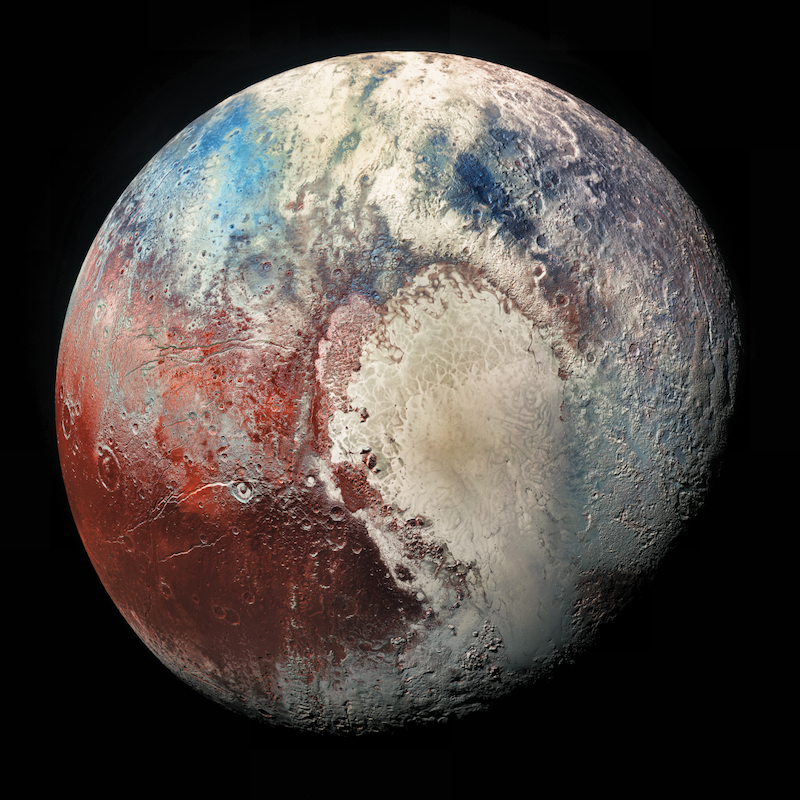
Pluto stole the attention back, not by name, but by best known of its class. Still the king.
However, Eris is more massive…
Its orbit is way more fucky than even that of Pluto tho.
(Actual colors not as depicted.)
Why are the colours different?
That was a friendly neighborhood OPA representative to talk about why Ceres should also be included
Remember the Cant!!!
If you’re counting Pluto then you also need to count Ceres, Eris, and Sedna.
ALWAYS HAS BEEN
I imagine nasa would be perfectly fine with Pluto still categorized as a planet. It was just a handful of people at a IAU conference(many had left by the time the vote happened) that made the change.
Historically it’s fine. Technically it’s not. The thing is, it’s still a type of planet, it’s not like it’s now called something completely different. It’s more specific to fall in line with the likely many, many neighbors that are out there.
I would completely agree with you except IAU specifically said Pluto is a dwarf planet and that, for some reason, a “dwarf planet” is NOT a sub category of planet. It’s its own thing and not a planet.
It was a weird conference and a weird vote.
Edit: “planet” IMHO is more of a traditional category like constellation. Some how a tiny rock like mercury is more like Jupiter than the tiny rock Pluto. It doesn’t make much scientific senseso it seems more traditional. It would be like removing the name for a constellation because one of the stars is really a bright nebula or something.
It was a weird conference and a weird vote.
Nah, the other option was to add a bunch of planets, including Ceres right between Mars and Jupiter. If you wanted to keep things as close to what they were before, removing Pluto was the more conservative option.
There could be many options. My favorite is a reclassification. Terrestrial planets(first 4), gas planets (next 4) and drwarf planets (numerous). Though mercury could fit into the dwarf planet category which is fine with me. The current classification was made specifically to demote pluto with rules that particularly apply to it so that mercury would not fit into it. It was to keep the “planet” category special and to not have too many(keep it traditional). Seems a bit geocentric and less scientific.
I totally agree. It felt like it was an arbitrary ruling to keep the number of memorable celestial bodies low.
I actually like the idea of PMOs being defined as planets but it also sounds like there’s too much disagreement for any resolutions on this topic.
The problem is that since Pluto was discovered, we’ve found many similar bodies. Astronomers suggest there could be hundreds.
If you define “planet” so that it excludes Pluto, 8 objects in our solar system qualify as planets. Any definition that includes Pluto qualifies at least 13 planets with a high likelihood that that number will increase every few years.

You know that’s right.
Scorpio
No, I think I’m a Gemini.
So close, that is a constellation!